Zagora vs Merzouga: The Ultimate Desert Comparison

Introduction
Morocco’s Sahara is far from a single, uniform landscape. Stretching across the country’s deep south and shaped by ancient rivers and shifting climates, it reveals very different desert environments depending on where you travel. Zagora and Merzouga stand as the two most accessible gateways to this Saharan world, yet they offer fundamentally distinct geographical settings, scales, and travel experiences. Zagora lies at the end of the fertile Draa Valley, where palm groves gradually give way to rocky plains and low pre-Saharan dunes, creating a transitional desert landscape ideal for short excursions and flexible itineraries. Merzouga, by contrast, sits directly on the edge of Erg Chebbi, home to Morocco’s highest and most iconic sand dunes, where towering seas of sand dominate the horizon and define the classic Sahara image.
Zagora Desert
Landscape & Geology
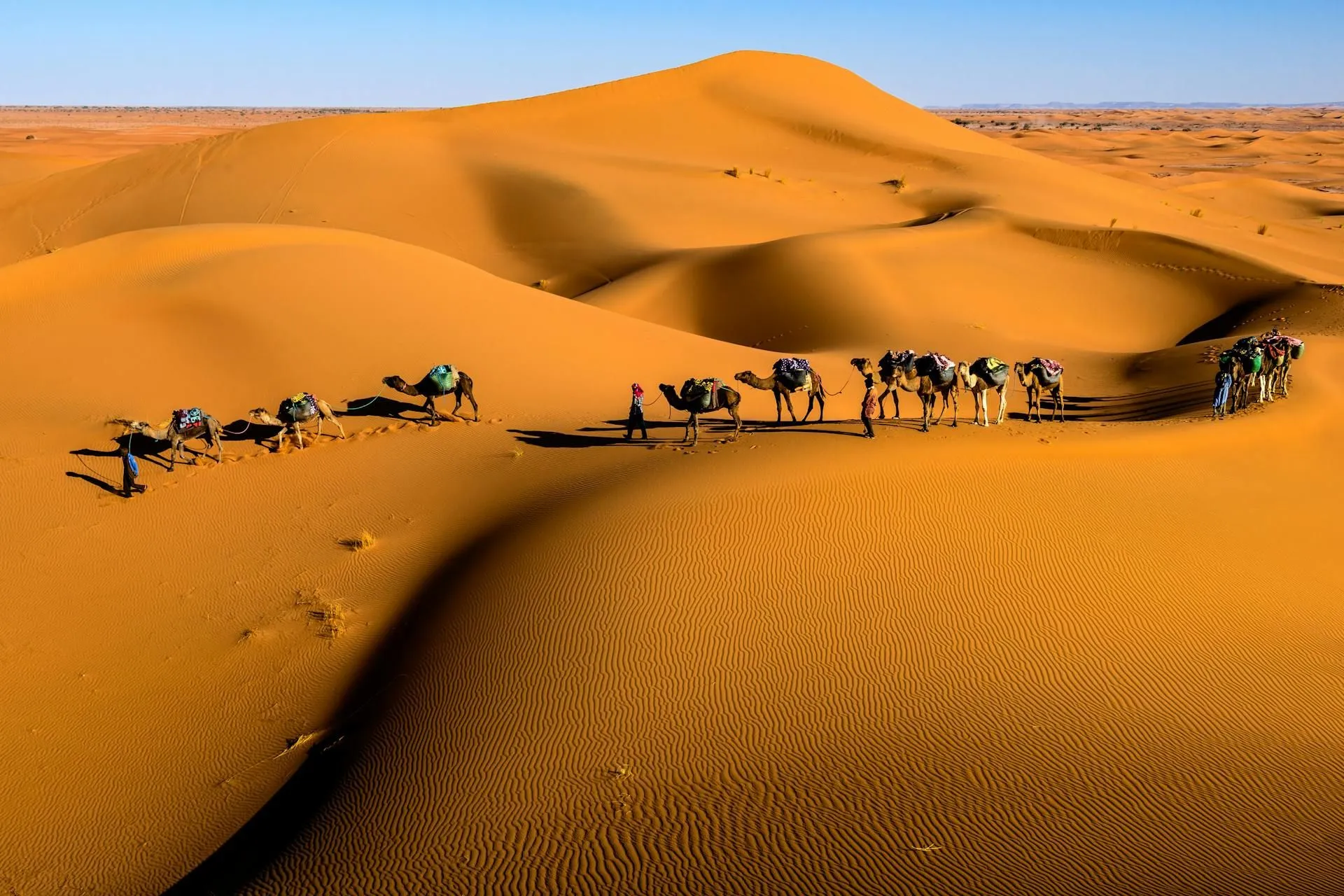
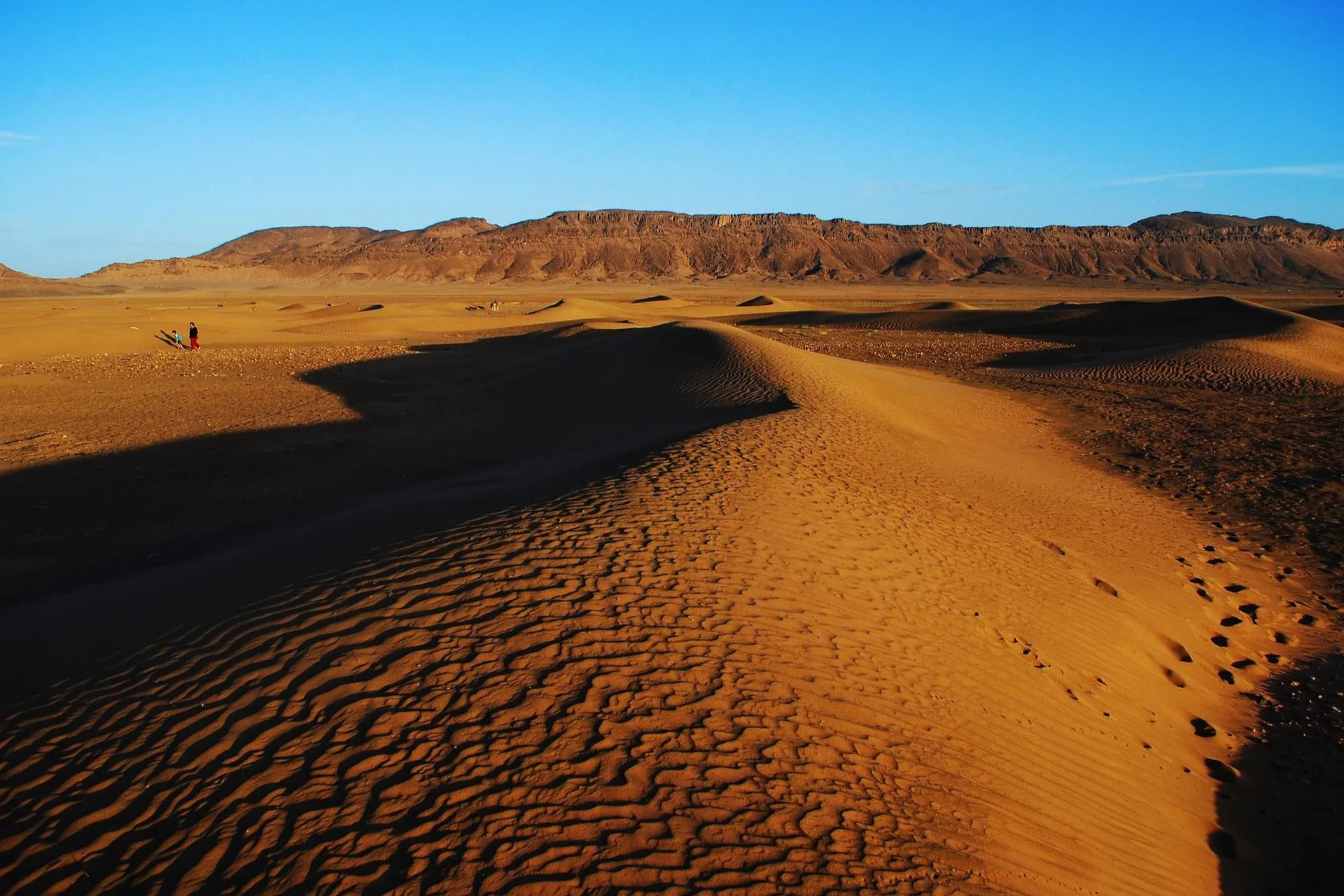
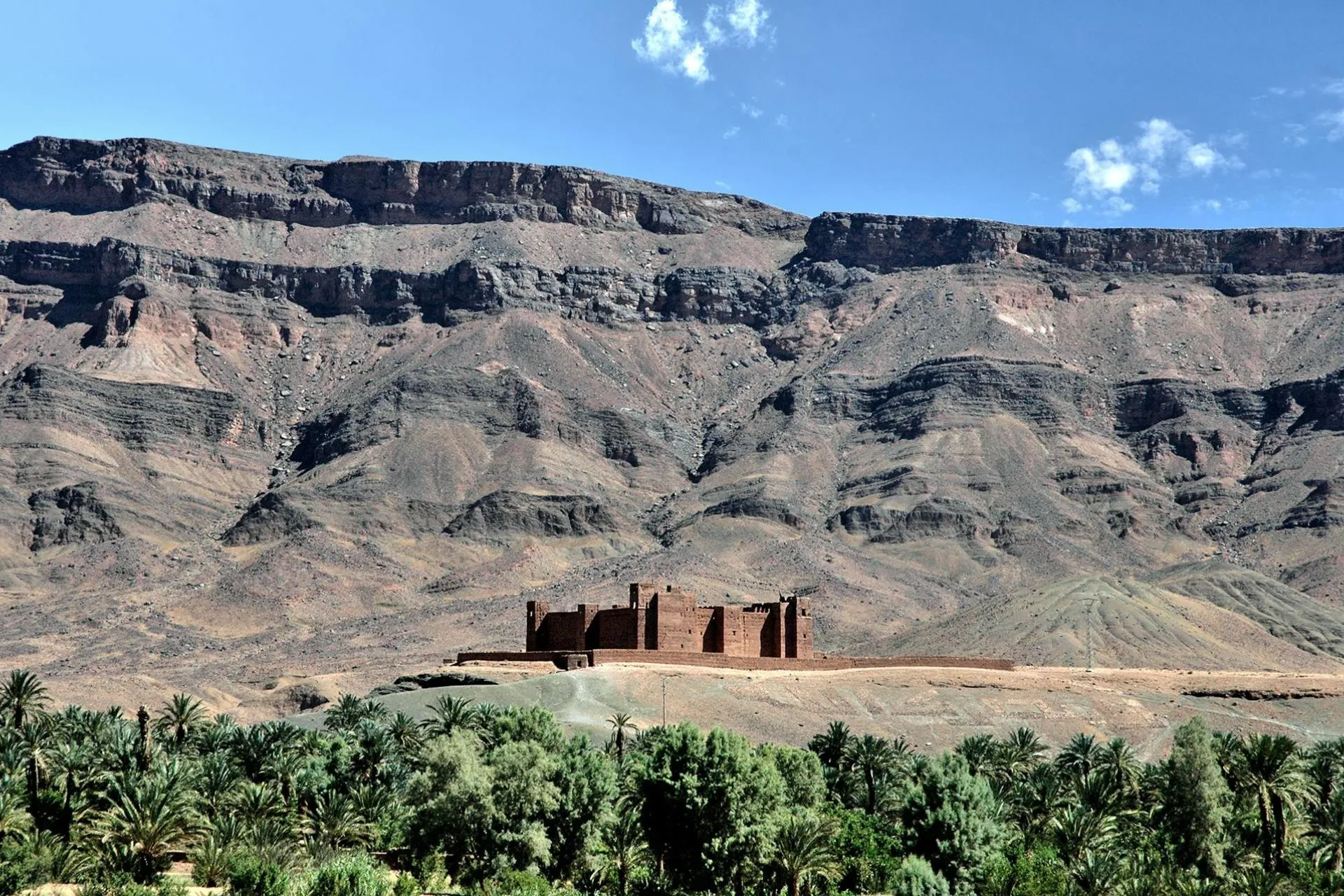
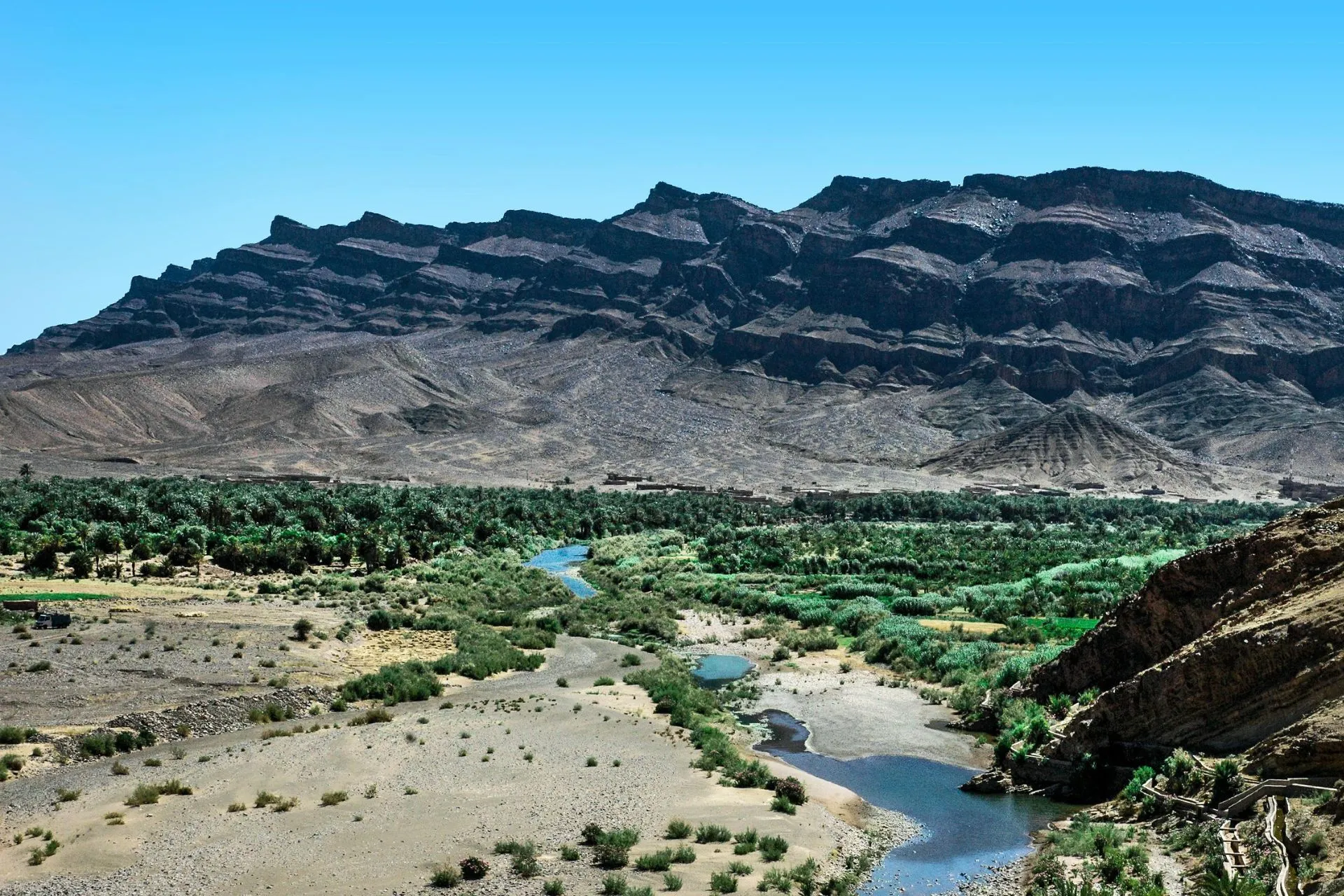
Zagora lies in the heart of Morocco’s Drâa‑Tafilalet region, a remarkable transition zone between fertile palm‑lined valleys and the vast Sahara Desert. The town sits just north of the Saharan fringe, where rolling hammada plains, a stony desert, meet the first sandy dunes of the south. Around 7–10 km south of town are the Tinfou dunes, modest sandy ridges that provide an accessible introduction to desert landscapes, great for short treks, camel rides, and sunset photography. These dunes rise gently from the rocky plains and offer a soft, golden contrast to the ochre earth of the Drâa Valley palmeraie. Further south and deeper into the desert lie the more dramatic ergs: Erg Lihoudi, with its sweeping sandy ridges and traditional camping experiences, and Erg Chigaga, one of Morocco’s most spectacular dune systems. Chigaga’s dunes stretch for roughly 40 km and can exceed heights of 250–300 m, making them among the tallest and most impressive in the country.
Accessibility & Travel Time
Zagora is a key stop on the classic southern Morocco route from Marrakesh or Ouarzazate. From Marrakesh, the drive is approximately 350 km (7 hours) via the Tizi n’Tichka pass and Ouarzazate, passing dramatic Atlas mountains and the lush Drâa Valley on the way. From Ouarzazate it’s roughly 160 km (2½–3 hours) along scenic roads. The Tinfou dunes are reachable within minutes of Zagora town, making them ideal even for day trips or quick desert experiences. However, reaching the remote sands of Erg Lihoudi or Erg Chigaga requires organized 4×4 transfers or off‑road vehicles and can take an extra 2–4 hours after Zagora, depending on destination and season.
Accommodation & Camping Options
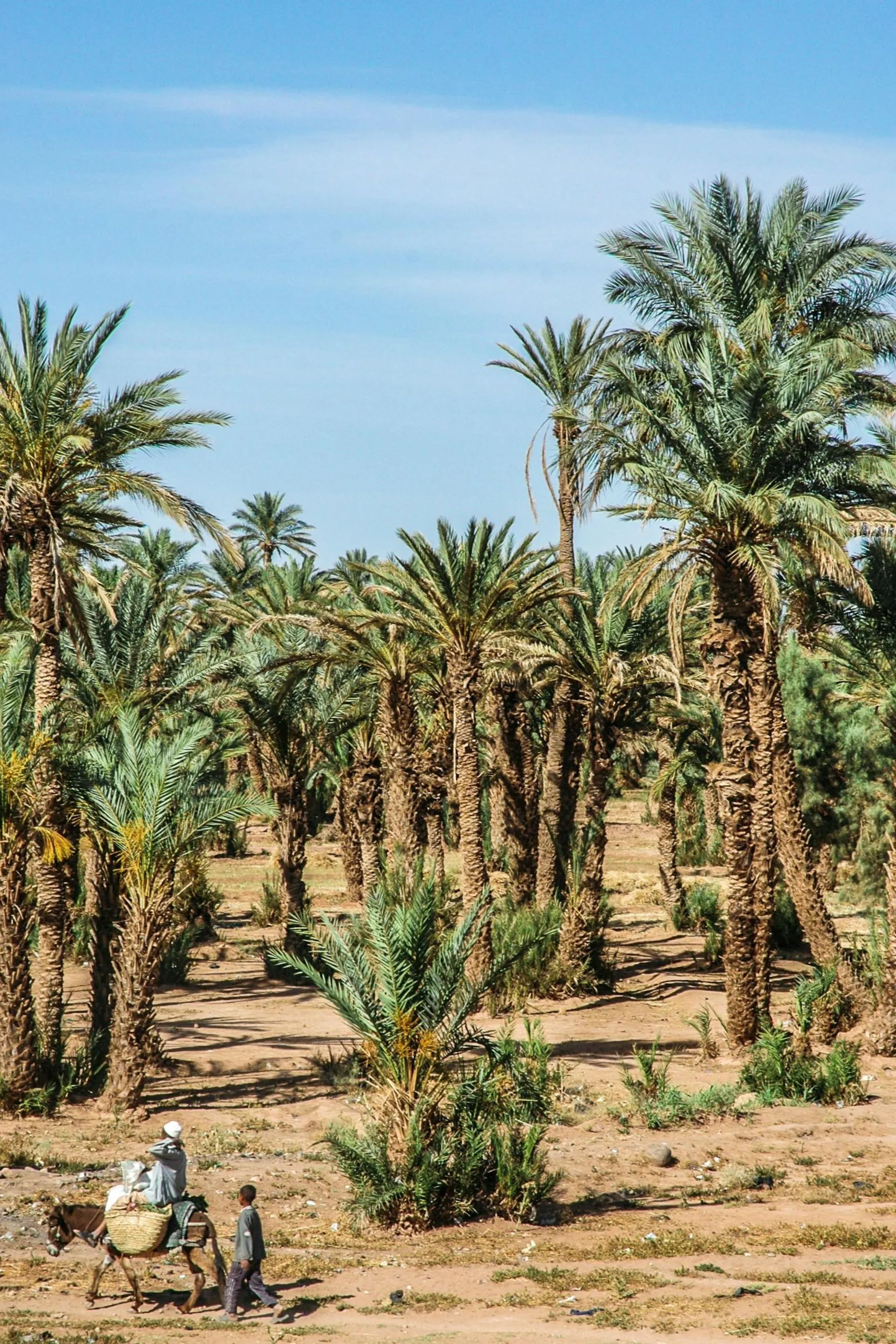
Zagora’s accommodation reflects its dual role as both an accessible desert gateway and a staging ground for deeper Sahara journeys. Options range from comfortable riads and guesthouses in Zagora town and nearby palmeraie villages, to traditional desert camps that blend Berber authenticity with modern comforts. Near the Tinfou dunes, you’ll find seasonal and year‑round bivouacs providing desert tents, private campsites, and basic facilities, ideal for a short night under the stars. For a higher level of comfort, luxury desert camps near Tinfou and along the Drâa Valley provide more refined assets.
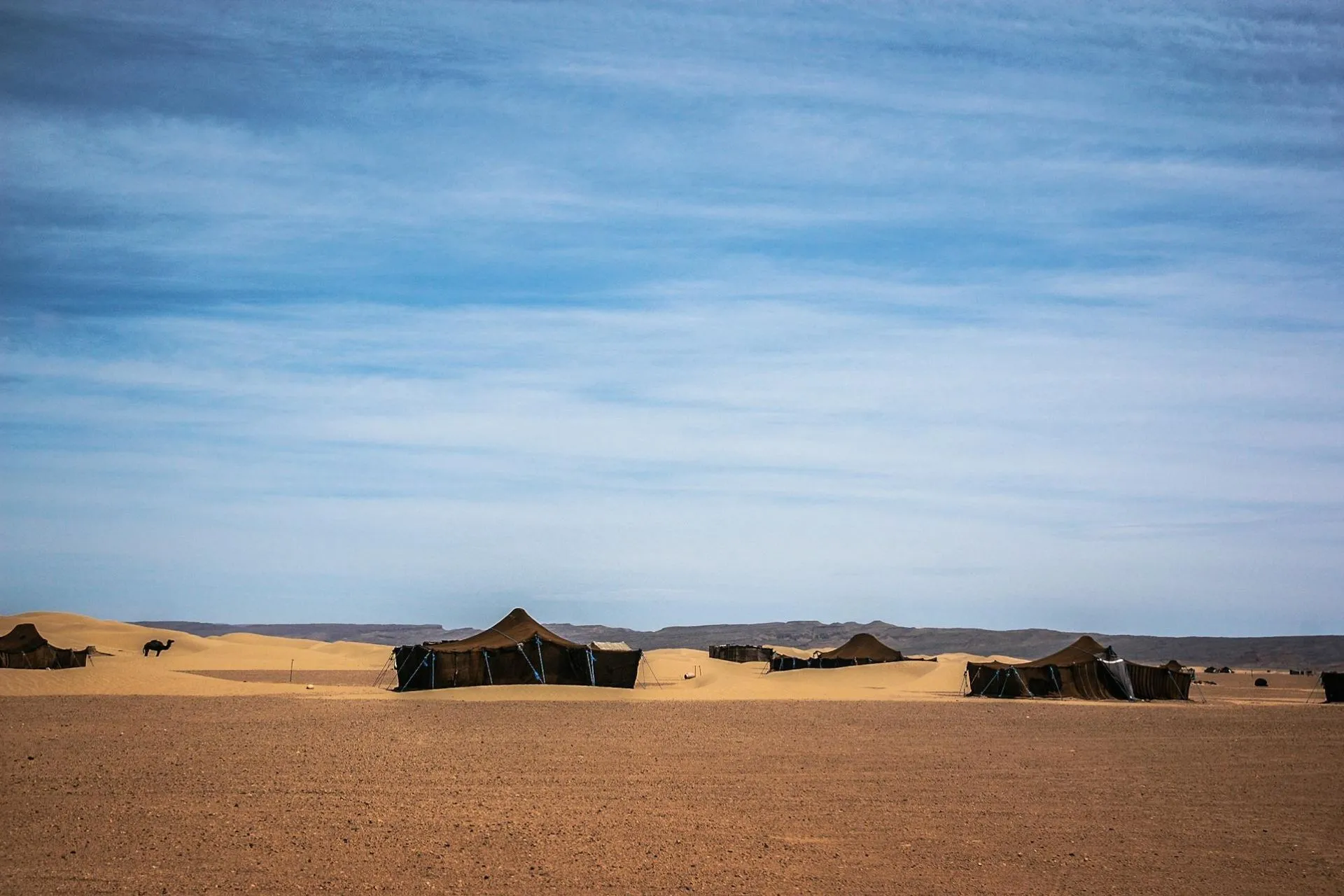
Heading deeper into the Sahara toward Erg Lihoudi or Erg Chigaga, multi‑day tours typically include desert camping under canvas, complete with cooked meals, guided camel treks, and evening music around fires. These camps range from basic to high‑end in amenities, but all emphasize space, isolation, and starry night skies that are largely free of light pollution.
Activities & Experiences
Zagora’s appeal lies not just in its dunes, but in the variety of ways travelers can experience the desert. For those seeking authentic interactions, such as nature lovers or cultural explorers, local guides often share stories of nomadic life, desert ecology, and caravan history, connecting with centuries of Saharan human heritage. However, Zagora can also be oriented for those seeking more of a luxury trip, therefore, providing more options than Merzouga. Popular activities include:
- Sandboarding & Dune Hiking: The soft, rolling dunes surrounding Zagora provide ideal terrain for sandboarding beginners, while longer dune hikes reward travelers with astonishing views over the Draa Valley and the arid plains of southern Morocco. Walking the dunes at sunrise or sunset reveals changing colors, cooler temperatures, and the raw beauty of the pre-Saharan environment.
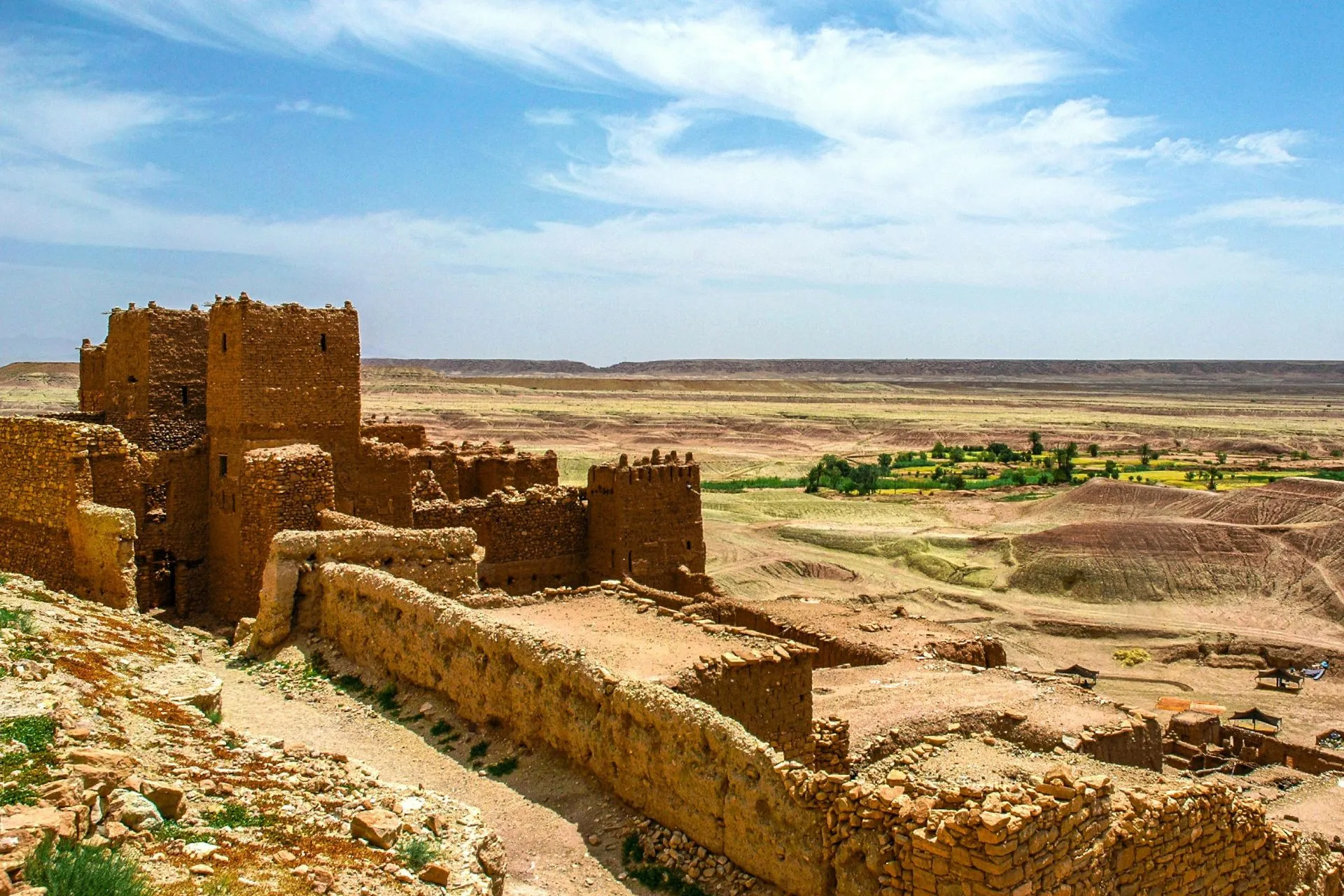
- 4×4 Desert Circuits: Guided off-road adventures by 4×4 vehicle allow exploration far beyond the main dunes, crossing rocky hammadas, dried riverbeds, and palm-filled oases. These desert circuits uncover hidden ksour, fossil-rich plateaus, abandoned kasbahs, and remote nomadic camps, giving an insight into Morocco’s Saharan geography and centuries-old desert survival traditions.
- Cultural Experiences: The human heritage of the Zagora region is very rich. By encountering local Berber and Saharan communities, your visits may include traditional music performances, tea ceremonies, artisan workshops, and walks through date-palm oases sustained by ancestral irrigation systems. These experiences highlight the deep cultural connection between Morocco’s desert people and their environment.
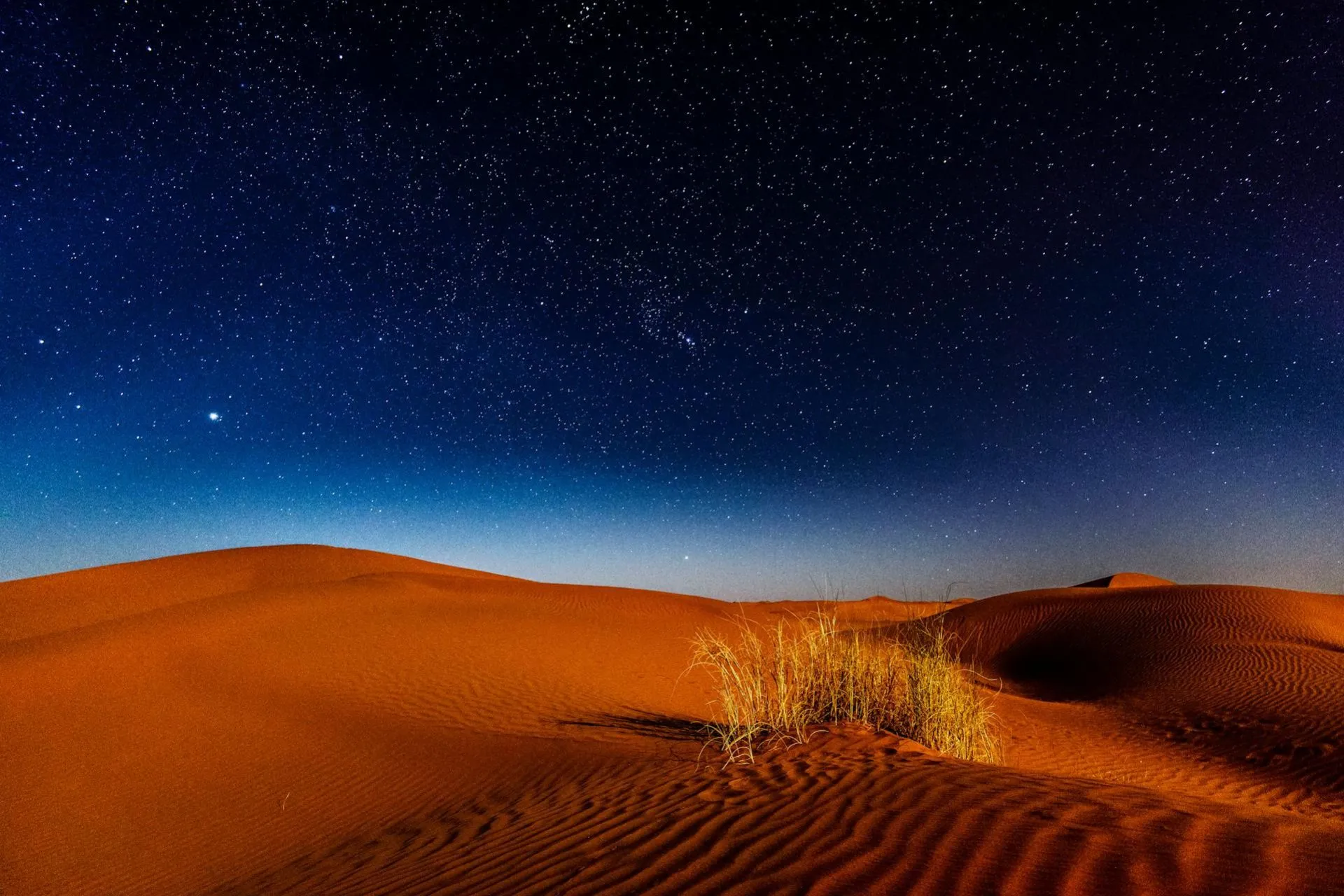
- Stargazing & Photography: Thanks to extremely low light pollution, the Zagora desert presents exceptional conditions for stargazing and night photography. Clear Saharan skies reveal the Milky Way, countless constellations, and dramatic star trails. Night walks on the dunes and early-morning shoots make this region a prime destination for landscape, astrophotography, and desert storytelling. A tripod is strongly recommended for night photography and astrophotography, allowing long exposures of star-filled Saharan skies and the Milky Way under minimal light pollution.
- Camel Treks: This timeless activity rhythm the Moroccan desert with traditional camel caravans, ranging from short sunset rides on the iconic Tinfou dunes near Zagora to immersive multi-day expeditions deeper into the Sahara. These treks follow ancient trans-Saharan trade routes once used by nomads and merchants, displaying a short introduction to desert life, silence, and vast open landscapes.
Practical Information & Logistics
Road access to Zagora is paved, but venturing into deeper deserts like Erg Chigaga requires 4×4 vehicles or guided tours, as sandy tracks and unmarked pathways necessitate experience in off‑road conditions. Water, sun protection, layered clothing, and good walking shoes are essential. Night temperatures in the desert can drop significantly, even in warmer months, making warm layers necessary for overnight stays. Limited mobile coverage may occur away from main roads and towns.
Merzouga Desert
Landscape & Geology
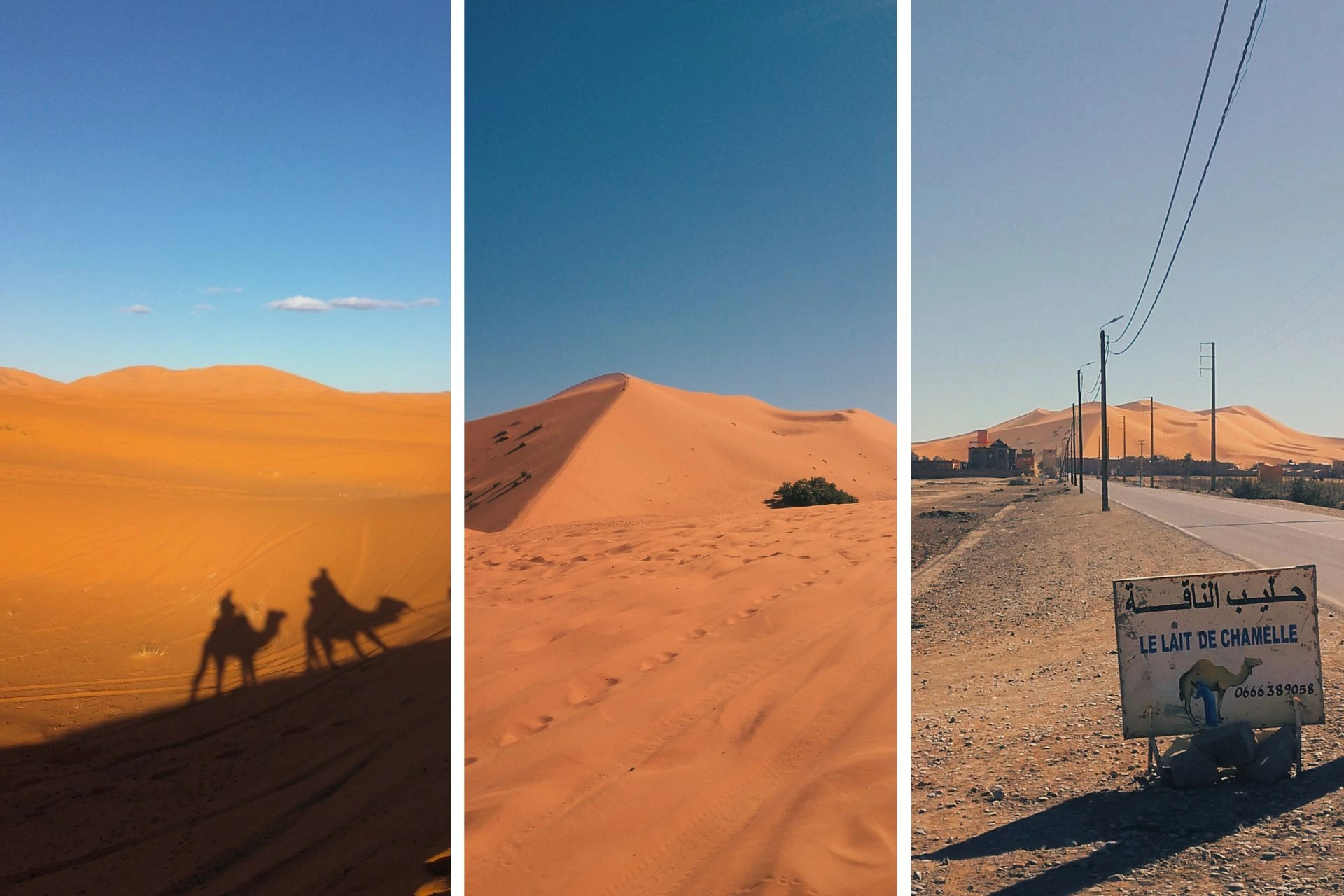
Merzouga is located in southeastern Morocco, 50km away from Erfoud, within the Drâa-Tafilalet region, close to the Algerian border, at the very edge of one of North Africa’s most iconic dune systems: Erg Chebbi. Unlike transitional pre-Saharan landscapes, Erg Chebbi is a true sand sea, rising abruptly from flat gravel plains and ancient lake beds. Its dunes stretch for roughly 28 kilometers north to south and up to 7 kilometers east to west, with the tallest crests reaching 150–250 meters, making them among the highest dunes in Morocco. Shaped continuously by Saharan winds, the dunes form sharp ridgelines, star dunes, and flowing corridors that shift color from pale gold to deep orange throughout the day. Seasonal salt lakes such as Dayet Srij appear at the base of the dunes after rare rains, attracting migratory birds and adding ecological contrast to the arid environment. This sudden transition from rocky reg plains and desert villages to monumental walls of sand gives Merzouga its dramatic, almost surreal character and defines it as Morocco’s most immersive and visually striking Sahara landscape.
Accessibility & Travel Time
Merzouga lies deep in southeastern Morocco and requires more travel time than Zagora, reinforcing its reputation as a destination for longer, more immersive Sahara journeys. From Marrakesh, the road distance is approximately 550 km, typically taking 9–10 hours of driving. The route crosses the High Atlas via the Tizi n’Tichka pass, continues through Ouarzazate, the Valley of the Roses, and dramatic gorges such as Todra or Dades, making the journey itself a major scenic experience. Most travelers choose to break the trip with an overnight stop in the Dades or Tinghir region. From Fès, Merzouga is roughly 480 km away and requires 7–9 hours by road, crossing the Middle Atlas, cedar forests near Azrou, and the Ziz Valley before reaching the desert fringe. Once in Merzouga village, the dunes of Erg Chebbi rise immediately behind the settlement. Desert camps are typically reached within 20 minutes by 4×4 vehicle or 30–60 minutes by camel trek, depending on camp location. This direct access where monumental dunes begin at the edge of town, makes Merzouga uniquely efficient for deep-dune experiences once the long approach journey is complete.
Accommodation & Camping Options
Accommodation around Merzouga ranges from traditional riads and guesthouses in the village to luxurious desert camps embedded within Erg Chebbi’s dunes. Luxury desert camps provide comfortable Berber-style tents, private bathrooms, communal dining, and evening entertainment with local music. For an immersive Sahara experience, dune-based bivouacs allow overnight stays directly in the desert, featuring traditional mattresses, carpets, and rooftop stargazing areas. Camps also often include guided camel rides, traditional tagine dinners, and fire-lit cultural evenings, offering a genuine connection to nomadic desert life.
Activities & Experiences
Located at the edge of the majestic Erg Chebbi, Merzouga is Morocco’s most iconic Sahara destination. Its towering golden dunes, deep desert silence, and rich Saharan culture make it a prime playground for immersive desert experiences, whether you are seeking adventure, photography, or cultural discovery.
- Sandboarding & Dune Hiking: Erg Chebbi is famous for hosting the highest sand dunes in Morocco, some rising over 150 meters. These steep, fine-grain dunes provide exceptional conditions for sandboarding, from beginner-friendly slopes near Merzouga village to adrenaline-filled descents on the tallest dunes. Dune hiking at sunrise or sunset rewards travelers with sweeping panoramas, dramatic shadows, and constantly shifting colors that define the classic Sahara desert landscape.
- 4×4 Desert Circuits: Merzouga is a gateway to vast off-road explorations across Saharan terrain. Guided 4×4 circuits traverse fossil-rich plateaus, black volcanic hammadas, seasonal salt lakes such as Dayet Srij, and isolated nomadic camps. These routes often follow ancient caravan paths, offering a deeper understanding of Morocco’s desert geography, trade history, and the resilience of Saharan communities.
- Cultural Experiences: The Merzouga region is culturally rich and diverse, blending Berber, Arab, and Sub-Saharan influences. Visits to Khamlia village allow travelers to experience authentic Gnawa music, rooted in centuries-old spiritual traditions. Additional encounters may include tea ceremonies, visits to traditional nomadic tents, artisan workshops, and walks through palm-filled oases sustained by ancestral irrigation systems.
- Stargazing & Photography: Similar to Zagora when it comes to stargazing, with virtually no light pollution, Merzouga is one of the best places in Morocco for watching stars and while shooting desert photographies. Night skies reveal the Milky Way in striking clarity, along with star constellations and long-exposure star trails. Photographers benefit equally from golden-hour dune textures, blue-hour contrasts, and silent night shoots deep within Erg Chebbi. A tripod is also essential for astrophotography and low-light desert scenes.
- Camel Treks: Camel trekking remains the quintessential Merzouga experience. Travelers can choose between short sunset rides into the dunes or multi-day camel caravans venturing deep into Erg Chebbi. These journeys mirror traditional trans-Saharan travel, offering an intimate rhythm of movement, complete silence, and nights spent in desert camps under star-filled skies, an authentic immersion into the Moroccan Sahara.
Conclusion — Zagora vs Merzouga
Both Zagora and Merzouga are giving exceptional desert experiences. Zagora provides the more accessible and widest choice, such as for Tinfou or the immersive multi-day treks in Erg Lihoudi and Chigaga. Furthermore talking about accomodations, Zagora gives more options, between luxury and authenticity. Merzouga is ideal for classic Sahara dune immersion, more relevant for people coming their ways from Fes or Meknes, and for those having more time to explore Morocco in depth.
| Zagora | Merzouga | |
|---|---|---|
| Main Advantages | Flexible gateway suitable for short stays or extended itineraries. Easy access from Ouarzazate & Marrakesh, immediate reach to nearby highlights for day trips. Deeper immersion is still possible via longer routes. Strong cultural and landscape-based experiences. | Immediate access to an iconic natural environment with striking scenery. Ideal for deep immersion, multi-day experiences, and outstanding sunrise, sunset, and night-sky conditions. |
| Limitations | The most impressive locations require organized transport and longer travel times. Nearby highlights may feel less dramatic for travelers seeking extreme landscapes. | Long travel distances from major cities require careful planning and often overnight stops. Less suitable for short or spontaneous visits. |
| Best For | Travelers with limited time, first-time visitors, culture-focused explorers, and those seeking a balanced experience with a touch of comfort. | Travelers seeking iconic scenery, photographers, adventure seekers, and those prioritizing immersion over accessibility and comfort. |
Zagora
- Easier access via major regional routes & Marrakesh
- Flexible itineraries from day trips to longer journeys
- Strong cultural depth and varied landscapes
- Remote highlights require longer transfers
- Nearby points of interest are more modest in scale
Merzouga
- Immediate access to iconic large-scale scenery via Fes
- Deep immersion through multi-day experiences
- Exceptional light and night-sky conditions
- Long travel distances from major hubs
- Less suited for short or last-minute trips
- Choose Zagora if you value flexibility, accessibility, cultural depth without heavy logistical & comfort constraints.
- Choose Merzouga if your priority is iconic scenery and full immersion, even at the cost of longer travel times.
- Avoid Zagora if large-scale, dramatic landscapes are your sole objective.
- Avoid Merzouga if time constraints or ease of access are critical.
Best Time & Conditions
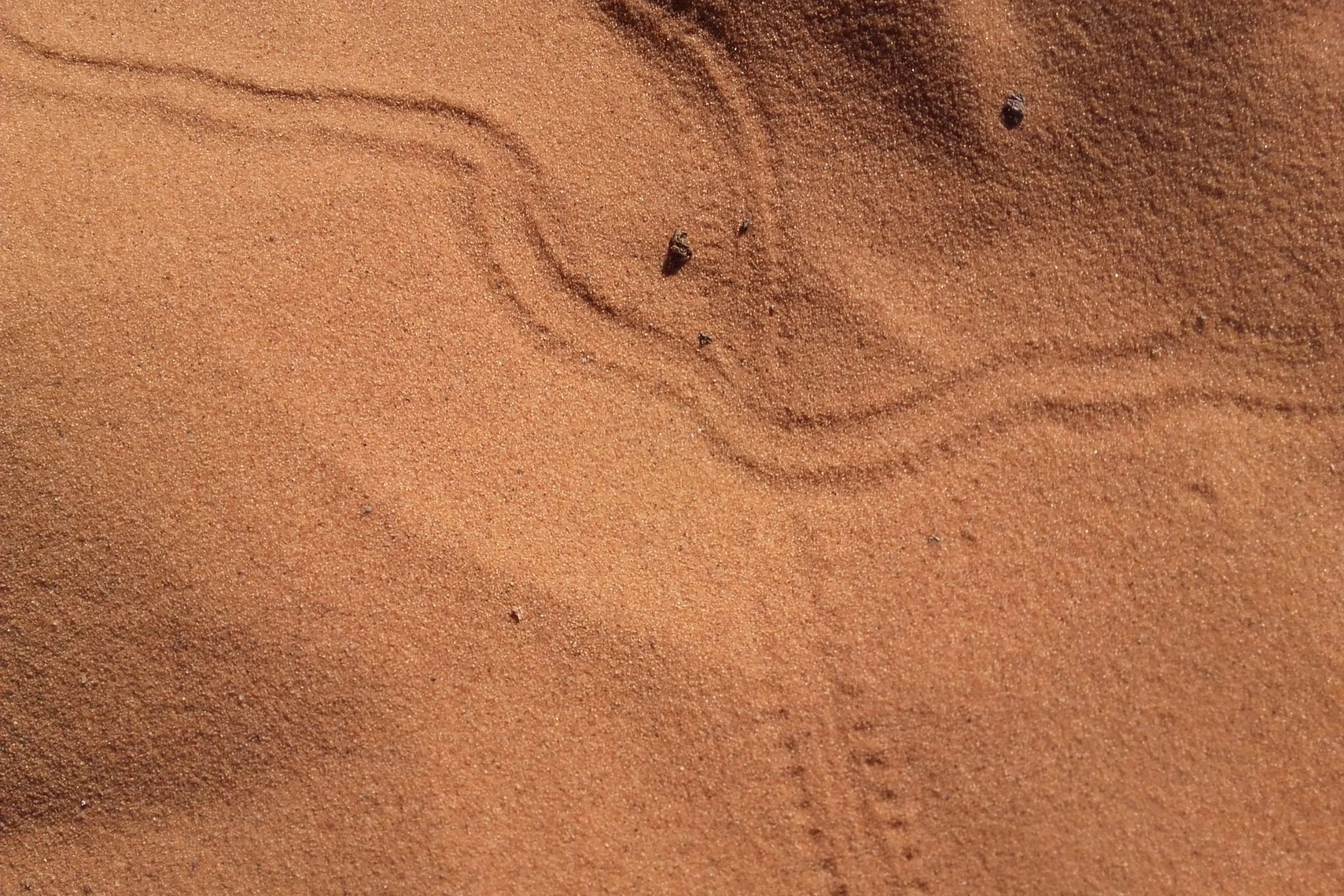
The desert climate around Zagora & Merzouga is characterized by a hot desert classification, featuring long, dry summers with temperatures regularly above 40 °C and much cooler nights, while winters provide mild days and crisp evenings. Both prime travel season runs from October to April, when daytime heat is bearable and nights are comfortable, sometimes even cold for camping. In early spring and late autumn, winds can shape the dunes, making up for dramatic light and shadow play for photographers. Summer visits are possible but require a very strong heat‑management planning.
Tips & Addresses
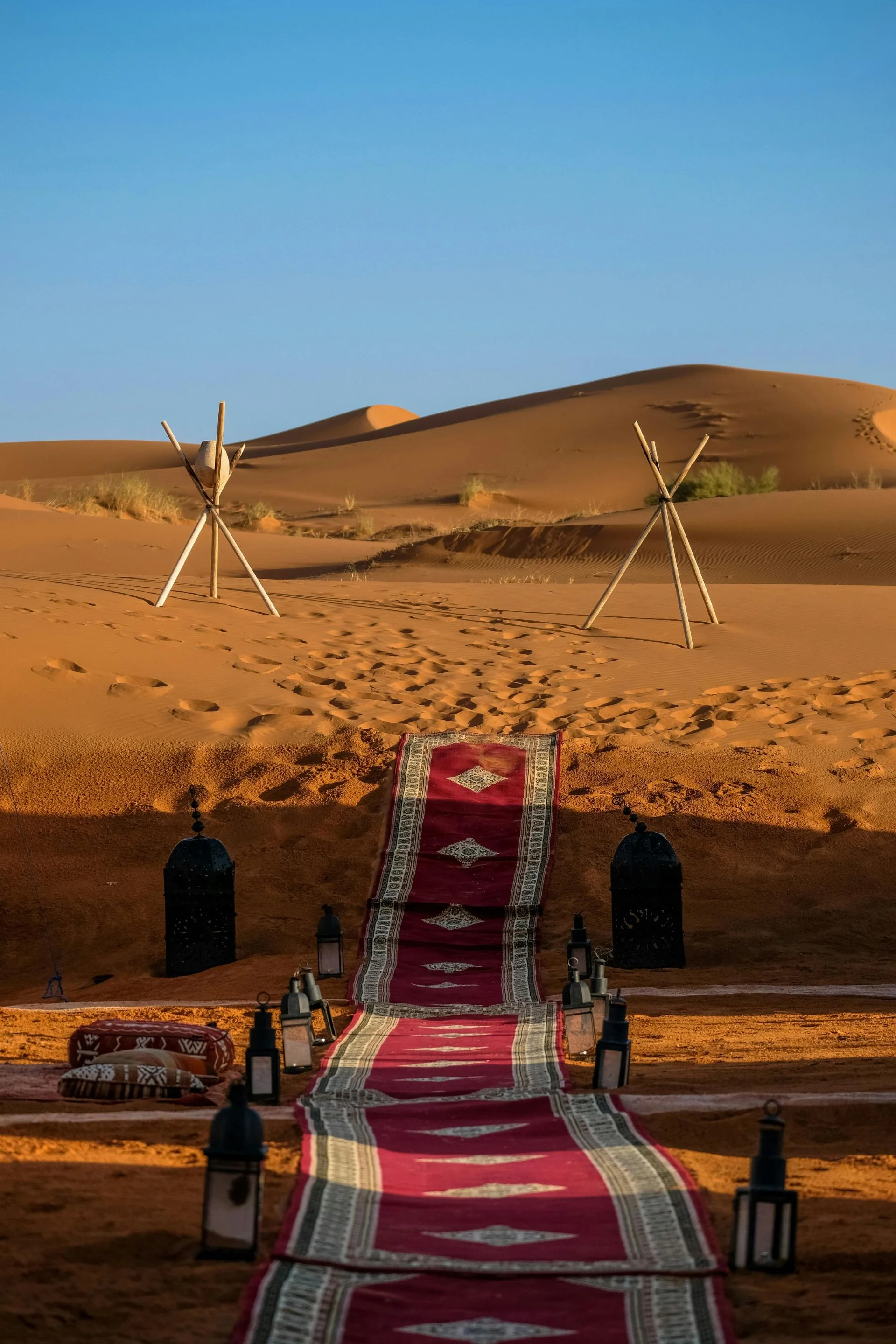
- Overnight Dune Camps: Spending a night in a desert camp is essential to truly experience the Moroccan Sahara. Choose well-known camps that offer insulated tents adapted for the colder nights with proper bedding adapted to cool desert nights, and freshly prepared traditional meals such as tagines and flatbread. Reputable camps also provide sunset camel transfers, evening campfires, and Berber music, ensuring both comfort and cultural authenticity. You must always check that the transfer price from Zagora & Merzouga to the Camps is included in the final price.
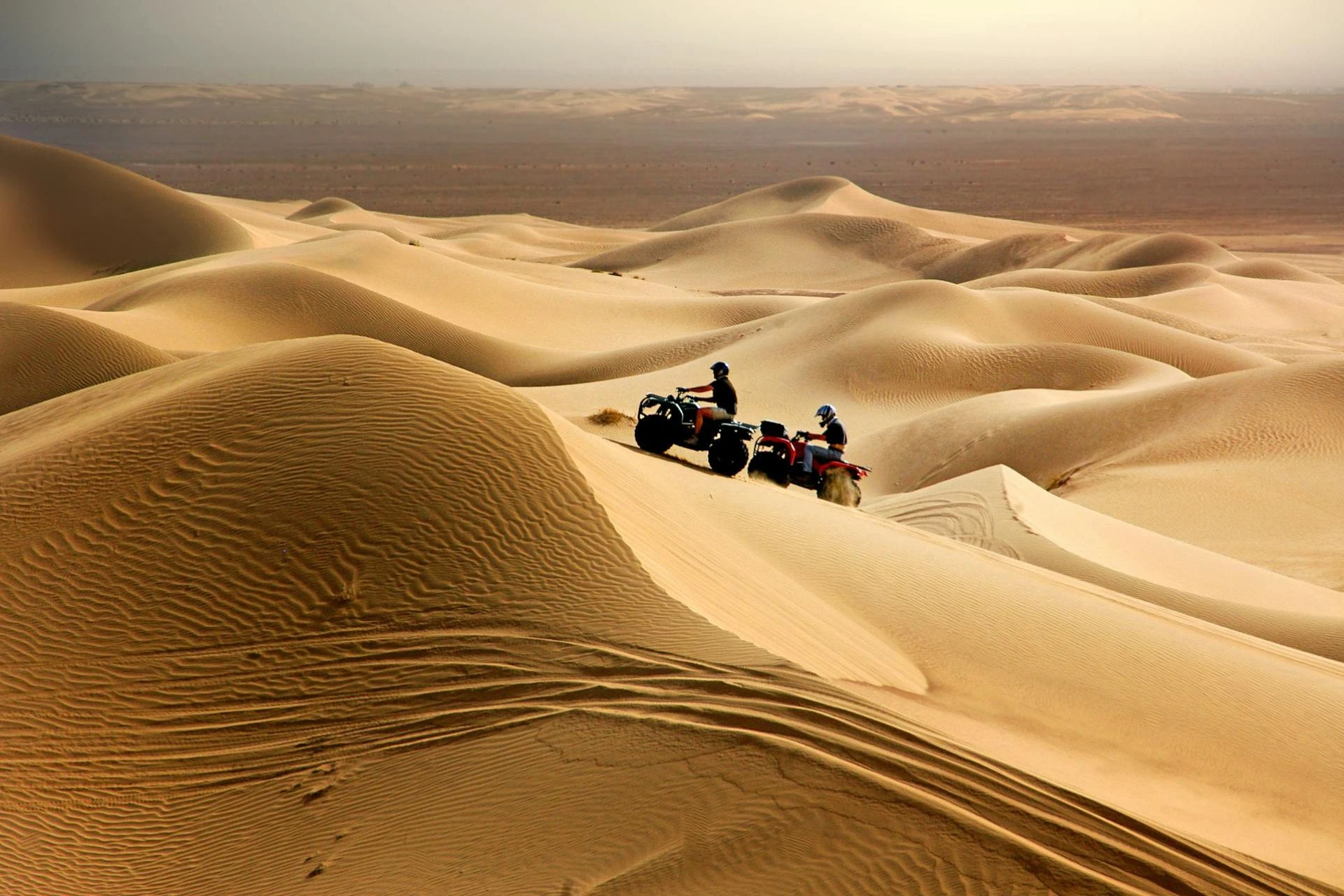
- Adventure Safety: Desert conditions require careful preparation. Always carry sufficient drinking water, high-SPF sunscreen, protective clothing, and a basic first-aid kit. Ensure your travel insurance explicitly covers desert excursions, camel trekking, and off-road travel. For longer tours, travel with certified guides only and well-maintained vehicles equipped for remote Saharan terrain. If riding 4×4 ATV or Camel, make sure to wear a safety helmet in all time.
Sustainability & Local Communities
Tourism around both Zagora & Merzouga can greatly benefit local Amazigh Berber communities when done responsibly. Choose operators who hire and train local guides, respect animal welfare, especially for camels, and support community cooperatives selling handicrafts and artisan products. Reducing waste, conserving water resources, and minimizing light pollution in camps greatly helps to preserve the fragile desert ecosystem.
Can I visit Zagora instead of Merzouga? ▼
Yes — Zagora provides accessible desert experiences ranging from short Tinfou dune visits to multi-day treks in Erg Lihoudi / Chigaga. Merzouga has taller dunes and extended Sahara experiences but generally requires more time.
Is Merzouga doable as a day trip from Marrakesh? ▼
No — Merzouga is remote, requiring overnight stays. Zagora’s Tinfou dunes are suitable for day trips.
What should I pack for a desert trip? ▼
Sun protection, layered clothing, sturdy footwear, water, first aid, and warm layers for nighttime. Longer Zagora or Merzouga treks require more supplies.
Are camel rides safe for children? ▼
Short rides in Tinfou dunes are generally safe; for overnight treks, assess operator safety and children’s comfort.
Can I use a drone in the desert? ▼
Drone regulations vary; always check local rules and respect wildlife and privacy.
How do I choose a reputable desert camp? ▼
Look for ethical practices, verified reviews, transparent pricing, and clear logistics. Ensure responsible camel care and local Amazigh Berber communities employment.
Our Partners
Find a Flight
Reserve an Hotel
Rent a Vehicle
Was this Guide Helpful?
Receive the Newsletter
Receive infos, e-catalogues, gifts & more by subscribing for free

More information on data privacy policy here. By subscribing to our newsletter, you allow yourself to send your personal information (email address) to Visit Idea, the recipient and manager of your subscription. Your data are stored in the European Union and in third-party countries assuring an adequate level of protection in accordance with a decision adopted by the European Commission or in accordance with the contractual clauses approved by the European Commission. Your data will be suppressed at the latest three years (3) after our last contact, in the absence of unsubscription. You can withdraw your consent to the processing of your personal data at any time using the unsubscribe link in each newsletter you receive, which will terminate your subscription.